

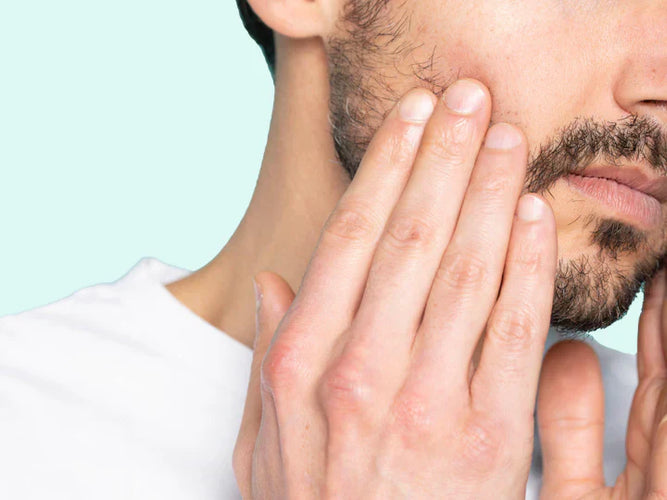
- What is beard dandruff?
- What is the difference between beard dandruff and dry skin?
-
What causes dry skin or beard dandruff?
- Dryness caused by cold, wind and low humidity (dry skin)
- Yeast activity on the skin (beard dandruff)
- Harsh or unsuitable cleansing (dry skin, sometimes beard dandruff)
- Insufficient distribution of natural oils (dry skin)
- Friction caused by beard growth (dry skin, irritation)
- Lifestyle factors (can contribute to both)
- What can you do about dry skin under your beard?
- Frequently asked questions about dry skin under your beard
- Conclusion
- Resources
Itching, flaking or a tight feeling under your beard are very common. The skin can feel dry or start to flake, especially in winter or as your beard grows longer. Many men immediately assume it is beard dandruff, but it can just as easily be ordinary dry skin beneath the beard. In this article, you will learn what causes these symptoms and which steps can help calm and care for the skin so it feels more comfortable again.
What is beard dandruff?
Beard dandruff occurs when the skin beneath your beard starts to flake due to an increase in natural yeasts. These tiny micro-organisms are normally present on the skin, but they can become more active when the skin is out of balance. The flakes are often white or yellowish and may feel slightly greasier than the small, dry flakes caused by simple dryness.
What is the difference between beard dandruff and dry skin?
Beard dandruff and dry skin can look similar because both cause flaking, but they have different underlying causes.
- Beard dandruff is more often linked to increased yeast activity and a skin barrier that becomes easily irritated.
- Dry skin usually develops when the skin lacks moisture or is exposed to cold weather or harsh cleansing.
The two are often confused because they can occur at the same time. Dry skin typically causes small, fine flakes and a tight feeling, while beard dandruff tends to look greasier and is sometimes accompanied by more itching. Redness under the beard can be a sign of irritation, for example from friction, weather conditions or certain products. This indicates that your skin may need some extra care.
What causes dry skin or beard dandruff?
Flaking beneath the beard can have several different causes. Some factors mainly lead to dry skin, while others contribute to beard dandruff (flakes caused by increased yeast activity). They can also occur at the same time. Below you can see which factors relate to which issue.
Dryness caused by cold, wind and low humidity (dry skin)
Cold air and wind reduce humidity, which makes the skin lose moisture more quickly. Under a beard, the skin can dry out even faster because the hairs themselves draw moisture from the skin when they are dry. This mainly leads to small, dry flakes and a tight, uncomfortable feeling.
Yeast activity on the skin (beard dandruff)
Yeasts are very small, naturally occurring micro-organisms that live on everyone’s skin. Normally you do not notice them, but when the skin becomes unbalanced, for example due to cold weather, stress or certain products, these yeasts can become more active. This mainly leads to greasier white or yellowish flakes and increased itching, which is commonly referred to as beard dandruff.
Harsh or unsuitable cleansing (dry skin, sometimes beard dandruff)
Cleansing products that contain perfume, alcohol or have a high pH can weaken the skin barrier. As a result, the skin loses moisture more quickly and becomes more prone to irritation.
How can you recognise this as a user?
- The ingredient list includes terms such as “parfum”, “fragrance” or “alcohol denat.”
- A product with a pH of 7 or higher (neutral to alkaline) can be too harsh for the face and beard area.
- Cleansers formulated for the beard or face usually have a pH between 4.5 and 6.
Practical advice
Prefer using: A beard shampoo or facial cleanser labelled mild, pH-balanced or fragrance-free.
Avoid using: Shower gel, handsoap or products rich in SLS/SLES on the face or beard.
These types of products mainly contribute to dry skin, but they can also indirectly worsen beard dandruff by disrupting the skin’s balance.
Insufficient distribution of natural oils (dry skin)
Under a longer or fuller beard, natural oils (sebum) have more difficulty reaching the skin. As a result, the skin can feel dry, tight or sensitive, and the beard hairs themselves may become coarse or brittle. This mainly leads to dry flakes rather than beard dandruff.
Friction caused by beard growth (dry skin, irritation)
As the beard grows, the hairs can be sharp, curly or coarse. This creates mild friction against the skin, especially when the beard moves or rubs against clothing. As a result, the skin can become red or more sensitive, which increases the likelihood of dry flakes.
Lifestyle factors (can contribute to both)
Stress, lack of sleep and a less nutritious diet can all affect the skin barrier and the skin’s ability to repair itself.
Why?
- Stress hormones make the skin more sensitive and more prone to dryness.
- Poor sleep slows down the skin’s natural recovery.
- Deficiencies in vitamins or healthy fats can make the skin dry, flaky or less resilient.
Lifestyle factors therefore contribute to dry skin, but they can also increase the skin’s sensitivity to excessive yeast activity.
What can you do about dry skin under your beard?
1. Wash your beard the right way
Use a mild, pH-balanced beard shampoo. The skin’s natural pH is around 5.5, so products that match this help keep the skin barrier intact. Hot water and harsh soaps remove too much of the skin’s natural oils, which makes dryness develop more quickly.
2. Hydrate daily with beard oil
Ingredients such as jojoba oil, argan oil or almond oil closely resemble the skin’s natural sebum. They absorb quickly, keep the skin soft and help reduce flaking. Massage the oil right down to the skin beneath the beard so both the skin and hair follicles are nourished.
3. Use an exfoliant (once a week)
BHA (salicylic acid) works well between the beard hairs and removes dead skin cells without scrubbing. It helps clear the pores and reduce flaking. Once a week is enough to keep the skin balanced without causing irritation.
4. Comb or brush your beard regularly
A soft brush helps distribute natural oils, prevent ingrown hairs and gently massage the skin. This stimulates circulation and makes the skin feel less tight or itchy.
5. Pay attention to stress and nutrition
Stress influences sebum production and can make the skin more reactive. A nutritious diet rich in omega fats and vitamins helps the skin recover and supports the natural skin barrier.
6. Consider the weather
Cold and dry air pull moisture from the skin. Protect your skin in winter by using a hydrating oil or lotion more frequently. Indoor heating can also dry the skin; a humidifier may help.
7. Choose care that suits your skin type
Sensitive skin benefits from mild formulas without irritating ingredients. If your skin is naturally oilier, a lighter oil often feels more comfortable as it absorbs quickly. Pay attention to how your skin responds and adjust your routine accordingly.
8. Use the right products
If the skin under your beard needs extra support, targeted products can help calm the skin and nourish the hair follicles. The Neofollics Beard Growth productline is developed to support the skin without feeling heavy or greasy.
Also read: Stimulating beard growth: follow our tips for a fuller beard.
Frequently asked questions about dry skin under your beard
Can you use too much product?
Yes. Using too much oil or balm can feel heavy on the skin or clog the pores. It is better to start with a small amount and add more only if needed.
Can beard dandruff disappear on its own?
Sometimes, especially if the cause is temporary, such as cold weather or stress. However, the skin often remains sensitive until you adjust your care routine.
Does trimming my beard help?
With a longer beard, natural oils have more difficulty reaching the skin. Trimming it slightly shorter can sometimes help the skin receive the care it needs more effectively.
What works better against flakes: oil or balm?
Beard oil penetrates more deeply into the skin and is often the better choice for dry skin. Balm is mainly useful for styling and keeping the beard hairs comfortable and soft.
Conclusion
Dry skin or beard dandruff can feel uncomfortable and may affect your confidence, but in most cases it can be improved with the right care. Gentle cleansing, daily hydration and weekly exfoliation help support the skin’s natural balance. Factors such as weather, stress and diet also play a role, so being more aware of these can make a difference.
Pay attention to signs like flaking, itching or redness, and adjust your routine when you notice that your skin needs extra care. Choose products that suit your skin type and give your skin the time it needs to recover. With a consistent routine, the skin beneath your beard usually becomes calmer fairly quickly, and your beard will look healthier and better maintained.
Resources
WebMD. (2025). How to treat beard dandruff.


This information does not replace professional medical advice. If in doubt, always consult a doctor or specialist.


