

- How can you tell the difference between dry and oily dandruff?
- What is dry dandruff?
- What is oily dandruff?
- Why dry and oily dandruff need a different approach
- How do you treat dry dandruff?
- How do you treat oily dandruff?
- How do you prevent dandruff from coming back after successful treatment?
- FAQ
- Conclusion
- References
The successful treatment of dandruff on the scalp largely depends on the type of dandruff you have. In simple terms, people often talk about dry and oily dandruff. Although the symptoms may look similar at first, they are not the same. These two types of dandruff need different scalp care. Using the wrong products or an unsuitable routine can make the symptoms worse. In this article, we explain the difference between dry and oily dandruff and how to choose a treatment that fits your type of dandruff
How can you tell the difference between dry and oily dandruff?
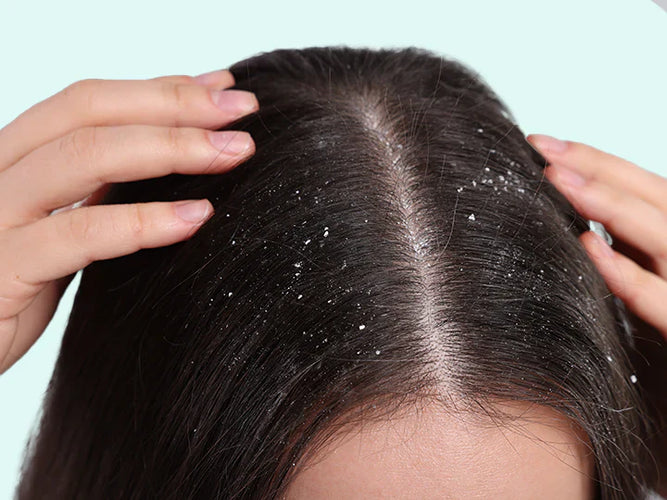
Dry and oily dandruff are caused by different processes in the scalp. By looking closely at the flakes and how your scalp feels, you can often make a first guess.

Infographic: difference between dry and oily dandruff
Important to remember: dry dandruff is not the same as a dry scalp.
What is dry dandruff?
Dry dandruff usually consists of small, white or light grey flakes that come off the scalp easily and may fall onto the shoulders. The scalp often feels tight and can be sensitive or slightly itchy, especially after washing.
Common causes of dry dandruff are:
• an imbalanced moisture level in the scalp
• washing too often or too intensively
• harsh shampoos that damage the natural skin barrier
• cold, dry air or temperature changes
With dry dandruff, there is usually no excessive oil production. The main problem is dryness and sensitivity.
What is oily dandruff?
Oily dandruff can be recognised by larger, yellowish flakes that stick to the scalp. The scalp may feel oily and the flakes are often harder to remove. Itching is common and the symptoms can be linked to seborrhoeic processes.
Common causes of oily dandruff are:
• excessive oil (sebum) production
• build-up of dead skin cells
• an imbalanced level of micro-organisms on the scalp
With oily dandruff, flakes stick to the skin because of oil, which makes them more visible and harder to get rid of.
Why dry and oily dandruff need a different approach
Dry and oily dandruff do not need exactly the same treatment. Making the wrong choice, such as washing too often with dry dandruff or not cleansing enough with oily dandruff, can make symptoms worse. Neofollics Scalp Therapy therefore does not offer a one-size-fits-all solution, but a product line that helps you adjust your care to what your scalp needs. The goal is always to restore balance, not just to reduce symptoms.
How do you treat dry dandruff?
With dry dandruff, it is important to be gentle with cleansing. Washing too often or using harsh shampoos can dry out the scalp even more. The focus is on mild cleansing and extra care.
The Neofollics Scalp Therapy clinical study guide explains that when flaking is linked to dryness, ingredients are mainly used that care for and support the scalp.
For example:
• witch hazel leaf extract
• horse chestnut extract
• licorice extract
• panax ginseng
• copper peptides (GHK-Cu)
These ingredients help to calm the scalp, reduce irritation and support the skin barrier. They are selected for their soothing, caring and skin-supporting properties.
A logical treatment within the Neofollics Scalp Therapy product line consists of:
1. Scalp Therapy Exfoliating Shampoo
Use the shampoo less often, for example a few times per week. The exfoliating effect helps to gently remove loose flakes without putting unnecessary stress on the scalp.

2. Scalp Therapy Nourishing Mask
Combine the shampoo with the Nourishing Mask to give the scalp extra care and hydration. This helps reduce the tight or sensitive feeling that often comes with dry dandruff.

Why this combination works
The Scalp Therapy study shows that flaking and a dry or irritated feeling often occur together. An approach that combines exfoliation with care was experienced by users as well tolerated and helped the scalp feel more comfortable. With dry dandruff, care plays the main role, while exfoliation remains supportive.
How do you treat oily dandruff?
With oily dandruff, the build-up of oil and dead skin cells plays a bigger role. Regular and thorough cleansing is therefore important to prevent flakes from sticking to the scalp.
According to the Neofollics Scalp Therapy clinical study guide, oily dandruff needs ingredients that focus on reducing the build-up of oil, flakes and microbial imbalance. For this, ingredients such as below are used:
- piroctone olamine
- climbazole
- medium chain triglycerides
These ingredients are selected because of their effect on flaking and their role in scalp balance in cases of dandruff and seborrhoeic processes.
An effective treatment within the Neofollics Scalp Therapy product line consists of:
1. Scalp Therapy Exfoliating Shampoo
Use the shampoo more often to keep the scalp clean and reduce excess build-up.
2. Scalp Therapy Peeling Serum
Add the Peeling Serum for extra exfoliation. This helps to loosen stuck flakes and built-up dead skin cells, especially when the dandruff is stubborn.

After more intensive cleansing, care is still important to prevent the scalp from becoming irritated.
Why this routine works
The Scalp Therapy study shows that flaking linked to seborrhoeic symptoms can respond well to regular cleansing and exfoliation. Most users tolerated this approach well. With oily dandruff, exfoliation plays a more active role, because the problem mainly comes from build-up and stuck flakes. Exfoliating helps to loosen these flakes.
How do you prevent dandruff from coming back after successful treatment?
When the dandruff symptoms are under control, it is all about maintenance. Choose a routine that fits your scalp type and stay alert to signs of imbalance. Alternate intensive exfoliation with mild care and adjust the frequency when your scalp feels calmer.
FAQ
What happens if I use products that do not match my type of dandruff?
Products that do not match your type of dandruff can further disturb the balance of your scalp. With dry dandruff, too intensive cleansing can increase the tight feeling, while with oily dandruff, an approach that is too mild can allow flakes and oil to keep building up. As a result, symptoms may last longer or return more quickly.
Should I keep using exfoliating products after the dandruff is gone?
Not with the same frequency. Once flaking has clearly reduced and your scalp feels calmer, you can reduce the use of exfoliating products. For many people, it is enough to use them only occasionally, for example as maintenance, and focus more on mild cleansing and care. This helps keep the scalp in balance without putting unnecessary stress on it.
Can I have both dry and oily dandruff at the same time?
Yes, that is possible. The scalp can react differently in different areas. For example, you may have stuck, yellowish flakes along the parting, while in other areas smaller, drier flakes come off more easily. In this situation, you can combine products from both care routines as described earlier in this article: regular but controlled exfoliation to loosen built-up flakes, combined with enough care to maintain comfort and balance. By paying close attention to how your scalp feels and adjusting the frequency, you can prevent one approach from making the other symptoms worse.
Conclusion
Dry and oily dandruff may look similar, but they are caused by different processes in the scalp and therefore need a different approach. By paying attention to the type of flakes and how your scalp feels, you can often tell which type you are dealing with. With dry dandruff, the focus is on mild cleansing and extra care, while with oily dandruff, regular cleansing and exfoliation are more important. Choosing products and routines that match your type of dandruff helps to keep symptoms under control and prevent them from coming back. In the end, it is all about restoring and maintaining a healthy scalp balance.
References
Neofollics Hair Technology. (z.d.). Clinical Study Report: Neofollics Scalp Therapy Product Line.


This information does not replace professional medical advice. If in doubt, always consult a doctor or specialist.


