

- What is glycolic acid?
- What does glycolic acid do for the skin and scalp?
- Does glycolic acid work for acne?
- Glycolic acid versus salicylic acid
- What should you look for in products with glycolic acid?
- How do you use glycolic acid safely?
- What should you not combine with glycolic acid?
- How can you gently exfoliate your scalp with a glycolic acid peeling serum?
- FAQ
- Conclusion
- References
You may see glycolic acid more and more often in hair and skin care products. Sometimes it is mentioned as an exfoliant, and sometimes as part of a peeling or serum. This can raise questions, especially because online information is not always clear or consistent.
Glycolic acid is a cosmetic ingredient that has been used in dermatology for many years. It is known for its exfoliating properties. This means it helps loosen dead skin cells from the surface of the skin, so the skin or scalp can feel smoother and more even.
This effect is also important for scalp care. A healthy scalp stays balanced when dead skin cells shed on time, the skin is not too oily or too dry, and the scalp can protect itself well. When this balance is disturbed, dead skin cells can build up. This may lead to flakes or an uncomfortable feeling on the scalp.
In this article, we explain how glycolic acid works for the skin and especially for the scalp. We also explain when it is used and why careful and gradual use is important.
What is glycolic acid?
Glycolic acid is an alpha hydroxy acid (AHA) that is naturally derived from sugar cane. In dermatology, it is used for its ability to gently exfoliate the top layer of the skin in a controlled way.
Glycolic acid has a relatively small molecule size. This allows it to work well on the surface of the skin, where dead skin cells can build up. Unlike physical scrubs, it does not contain rough particles. Instead, the exfoliation is chemical, which makes it milder and more even for the skin and scalp.
What does glycolic acid do for the skin and scalp?
The skin renews itself all the time. Old skin cells shed and make room for new ones. This usually happens naturally, but sometimes dead skin cells stay on the surface for too long. On the skin, this can cause an uneven feeling. On the scalp, it can lead to flakes or a tight and uncomfortable feeling.
Glycolic acid supports this natural renewal process in a gentle way. It helps loosen dead skin cells on the surface, so they can be removed more easily during cleansing. As a result, the skin or scalp can feel smoother and may respond better to care products used afterwards.
This is especially relevant for the scalp. Hair and natural oils can cause dead skin cells to build up more quickly. When these do not shed properly, the scalp can lose its balance. By supporting exfoliation in a controlled way, glycolic acid can help improve scalp comfort and prepare the scalp as part of a care routine. Glycolic acid is used here as a cosmetic care ingredient, not as a medical treatment.
Does glycolic acid work for acne?
In dermatology, glycolic acid is used as a supportive ingredient for mild to moderate acne, mainly on the facial skin. Through exfoliation, it can help reduce surface build-up and make the skin feel smoother and more even.
It is important to know that acne on the scalp is often not typical acne. It is more often related to acne-like conditions such as folliculitis. Glycolic acid is not a medical acne treatment and does not replace medication, but it can be part of a broader skin or scalp care routine.
When used correctly, glycolic acid can also affect the hydration of the upper layers of the skin. This can be helpful, as acne-prone skin may become dry more easily when using other active products.
Glycolic acid versus salicylic acid
Glycolic acid and salicylic acid are often compared, but they work in different ways.
- Glycolic acid (AHA) mainly works on the surface of the skin. It helps loosen and remove dead skin cells.
- Salicylic acid (BHA) is oil-soluble and can work deeper inside the pores, where oil can build up.
In some care products, these ingredients are combined on purpose. This is done within one carefully formulated product, where the concentration and pH level are balanced. Using more active ingredients is not always better, but a well-designed combination can complement each other.
What should you look for in products with glycolic acid?
The effect of glycolic acid does not depend only on the ingredient itself. It also depends on the concentration and how the product is formulated. In skin and scalp care, different concentrations are used, ranging from mild to more intensive.
In general, products with a lower concentration of glycolic acid work more gently and can often be used more frequently. Higher concentrations have a stronger exfoliating effect and are usually used less often.
The exact percentage of glycolic acid is not always shown on the packaging. However, the ingredient list can give a useful indication. Ingredients are listed in order of amount. If “glycolic acid” appears higher on the list, it likely plays a larger role in how the product works. If it appears lower on the list, it is often used as a supporting ingredient.
Because concentration, pH level and formulation all influence how a product works, it is best to choose products that are specifically developed for the skin or scalp and to introduce them gradually.
How do you use glycolic acid safely?
When using products with glycolic acid, it is important to pay attention to frequency and gradual use:
• start with using the product once or twice a week,
• observe how your skin or scalp reacts,
• only increase use if the skin tolerates it well.
Using glycolic acid too often or in high concentrations may lead to irritation or dryness, especially if you have sensitive skin.
Tip: always test the product on a small area first, for example on your arm. Apply a small amount to the chosen area and leave it on for one day. If you notice redness, itching or other irritation, stop using the product.
What should you not combine with glycolic acid?
The effect of glycolic acid depends on the pH level of a product. When several active acids from different products are used at the same time, this can put unnecessary stress on the skin.
This mainly applies to combining separate exfoliating products within one routine. In that case, the skin has little time to recover, which may lead to redness, a tight feeling or increased sensitivity.
For this reason, it is best to be careful when using glycolic acid at the same time as:
- vitamin C,
- other exfoliating acids (such as salicylic acid, lactic acid, mandelic acid or citric acid) when these come from separate products.
This is different from using one product in which these ingredients are carefully combined in advance. In that case, the formulation and instructions are designed to work together. When using separate products, it is usually better to apply active acids at different times.
How can you gently exfoliate your scalp with a glycolic acid peeling serum?
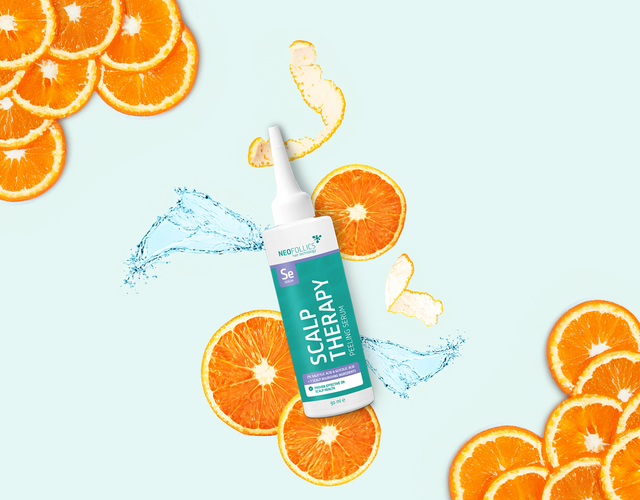
A healthy scalp starts with a clean and even skin surface. When dead skin cells and oil build up, the scalp may feel uncomfortable or start to flake more easily. The Neofollics Scalp Therapy Peeling Serum was developed as the first step in a care routine and is designed to exfoliate the scalp in a gentle and controlled way.
The Peeling Serum contains exfoliating ingredients such as glycolic acid and salicylic acid, which are combined in one carefully balanced formula. Glycolic acid helps loosen dead skin cells on the surface of the scalp, while salicylic acid can help reduce surface build-up of oil. By using these ingredients before washing the hair, the scalp is prepared for the next steps in the care routine.

After using the Peeling Serum, the healthy scalp routine continues. An exfoliating shampoo helps gently remove loosened residue and cleanses the scalp without drying it out. A nourishing mask then supports scalp comfort and helps the skin feel smooth and balanced again.
By combining these steps, a complete scalp care routine is created that focuses on balance, cleansing and care. These products are intended as cosmetic support for the scalp and are not a replacement for medical advice in cases of ongoing or severe scalp concerns.
⚠ Product data not available
FAQ
Can I use glycolic acid on my face?
Yes, glycolic acid is widely used in facial skin care because of its exfoliating properties. It helps remove dead skin cells and can make the skin look fresher and more even. It is important to choose a product that is specifically made for use on the face and to introduce it slowly. The skin on the face is often more sensitive than the scalp, so careful and gradual use is recommended.
Is glycolic acid suitable for people with a sensitive scalp?
Glycolic acid can also be used on a sensitive scalp, but extra care is important. Using the product less often and choosing a formula that is specially developed for the scalp can help maintain comfort. It is recommended to test a small amount first and to build up use gradually, so the scalp has time to adjust.
Can I use glycolic acid during pregnancy?
Glycolic acid is often used in cosmetic products in low concentrations. However, during pregnancy it is generally advised to be cautious with active ingredients. If you are unsure, it is best to discuss the use of glycolic acid with a doctor or midwife and always follow the instructions on the product packaging.
Can I use glycolic acid every day?
Using glycolic acid every day is usually not necessary and may lead to sensitivity or irritation for some people. In many cases, using it once or a few times per week is enough. This depends on the product and on how sensitive your skin or scalp is. It is important to pay attention to how your skin reacts and to adjust your routine if needed.
How long should you leave glycolic acid on your scalp?
This depends on the product and its formulation. Some products are designed to be left on the scalp for a short time and then rinsed off, while others can stay on the scalp for longer. For this reason, always follow the instructions for the specific product and avoid leaving it on longer than recommended to prevent discomfort.
Conclusion
Glycolic acid is an exfoliating ingredient that is used in skin and scalp care to help loosen dead skin cells in a controlled way. For the scalp in particular, this can support a more even and comfortable feeling, especially when dead skin cells and oil build up.
The way glycolic acid works depends strongly on the formulation, the concentration and how it is used. For this reason, it is important to choose products carefully and to introduce them gradually. When used as part of a well-considered care routine, glycolic acid can play a supportive role in maintaining scalp balance and comfort. It remains a cosmetic care ingredient and is not a replacement for medical advice.
References
Fartasch, M., Teal, J., & Menon, G. K. (1997). Mode of action of glycolic acid on human stratum corneum. Dermatology.
Sharad, J. (2013). Glycolic acid peel therapy – A current review. Clinical, Cosmetic and Investigational Dermatology.
Patel, M. N., Mahajan, R., & Chavan, R. B. (2023). Evaluating the efficacy and safety of alpha-hydroxy acids in dermatological practice. Dermatology Research and Practice.


This information does not replace professional medical advice. If in doubt, always consult a doctor or specialist.


